

My vibe engineering process and stack
What I use to write and review code

Yes, vibe engineering.
You might be familiar with the term “vibe coding”. I don’t prefer using it unless you are building a simple frontend on Lovable.
So what is the actual difference between the two?
Vibe coding
Instruct the end goal of an app
Iterate on design decisions
Verify if it works
Deploy
Vibe engineering
Instruct the problem we are trying to solve, whether a business problem or a bug
Read and iterate on the architecture of the code with plans
Read and execute the plans
Read code and debug
Rinse and repeat
Reading.
Read the code. Most non-technical people who are amazed by vibe coding rarely read the code AI puts out. It might be boring or it might already work fine.
However if you don’t read the code AI put out, you are missing out on one important skill.
Architecture.
I believe software and systems architecture is one of the few areas human expertise and heavy work will be required in.
Process
1. Plan
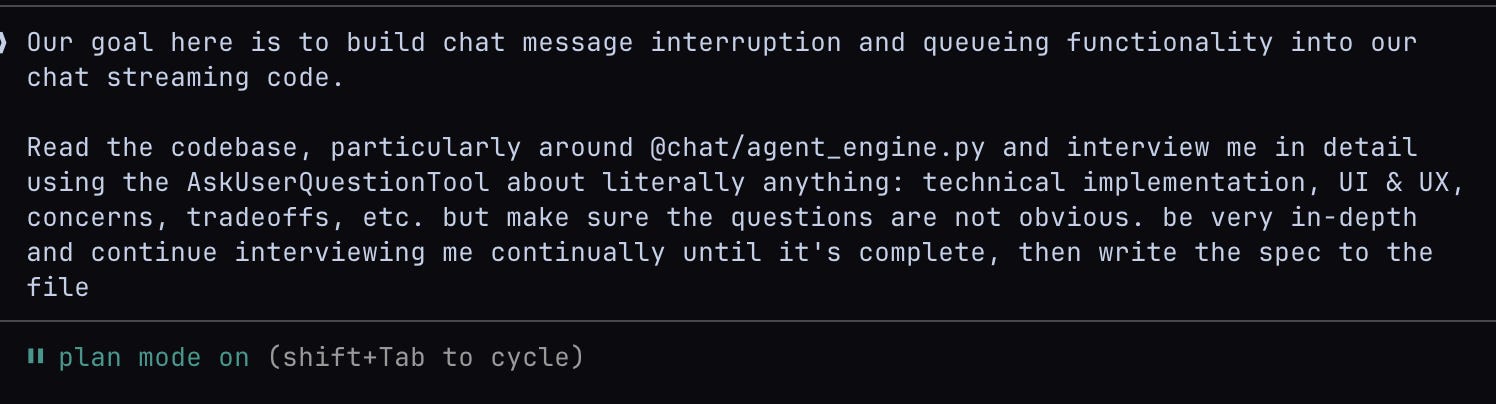
This prompt (by Thariq) is useful in particular to compel Claude into asking detailed, specific questions. It is vital that you instruct the agent to first read the existing code. If you don’t, it might write net new code instead of patching code and keep things simple.
2. Read the actual files
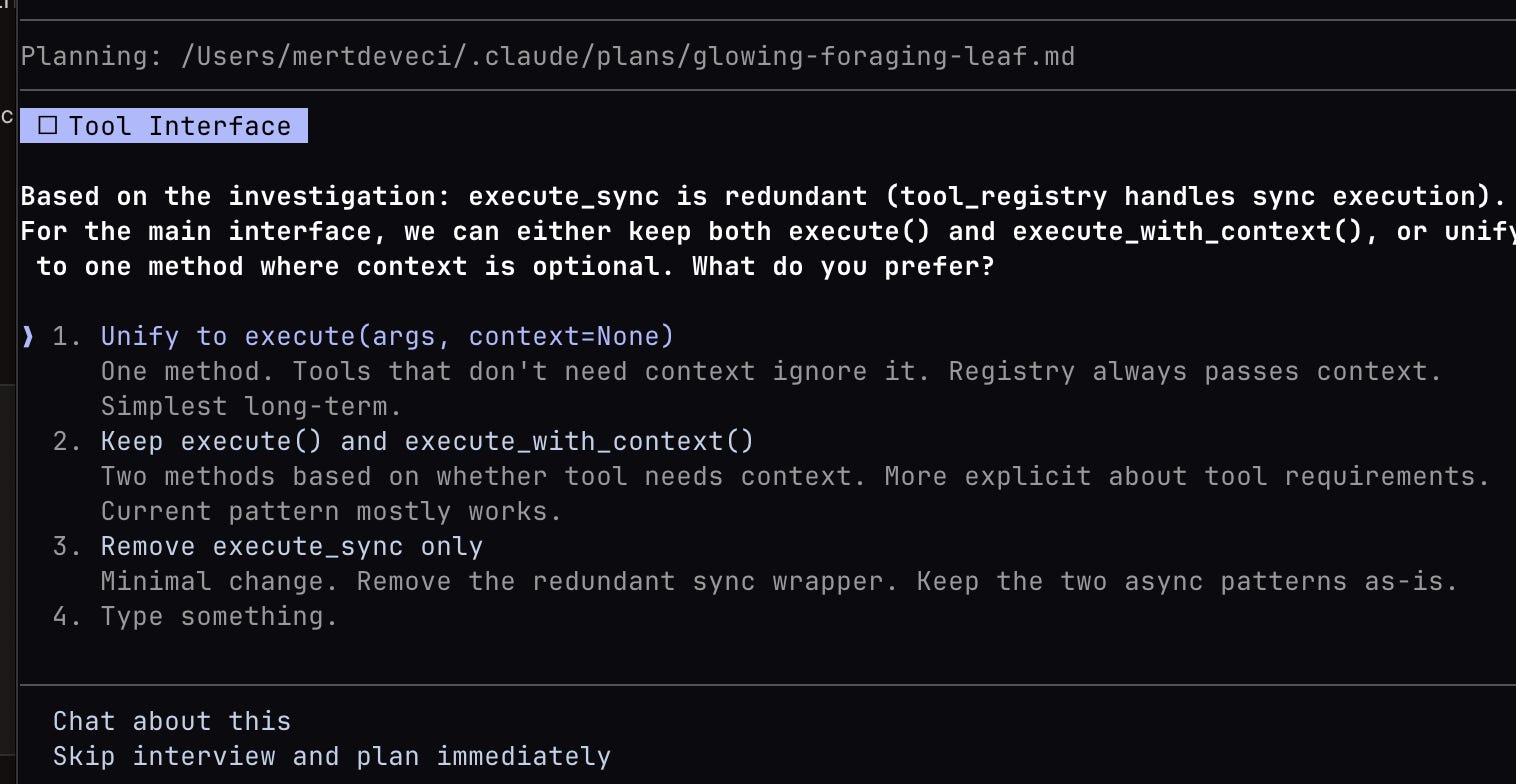
Here is a simplification task. I had to write 3 different functions for tool communication as I have client side tools in this repo.
Go and read the functions of execute() and execute_with_context to see if they can simplified into one interface.
This does not take much technical knowledge, it is almost by instinct that you can understand the difference in between.
If you don’t, Claude is likely to just delete a function that was created due to one specific reason or bug to fix an issue months ago.
Extra tip: Use Codex
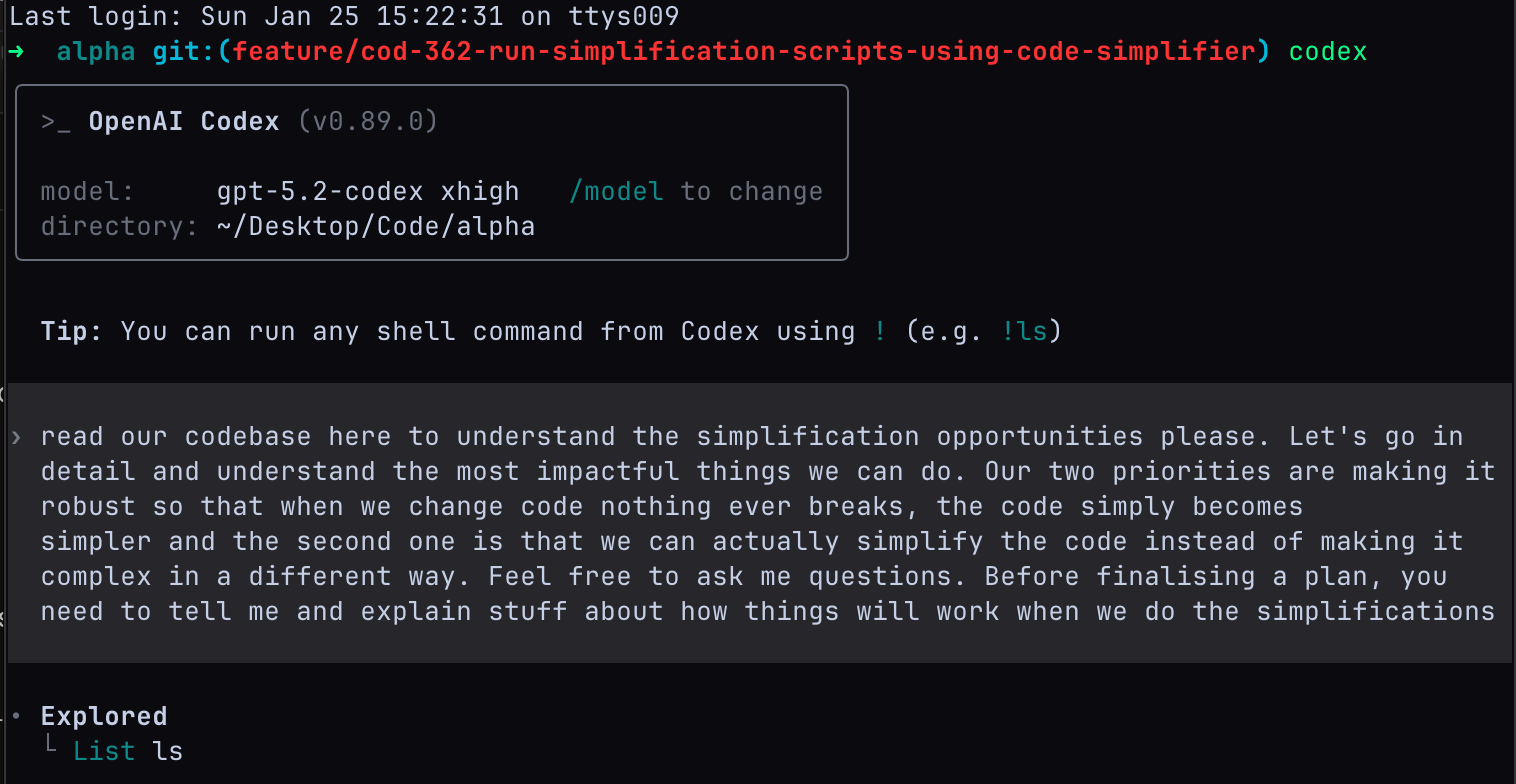
For both of the tasks above, use Codex after you use Claude.
Codex will take a longer time however the findings it will find will be
deeper
more technically and specifically explained
This is another way of saying that when you compare the results versus Claude, Claude’s findings almost come across shallow.

Codex, compared to Claude, is adorably honest. You will find cases where Claude will outright lie or leave something out while Codex will insist for certain bugs that it cannot be 100% sure but it is 80% sure.
Try this.
3. Read and execute
Now this is where the systems architecture skill comes into play.
Everybody has a plan until they get punched in the face
Mike Tyson
You do not want to get punched. So it is important that you read the actual plan.
One trick I find simple and useful is to ask the agent to provide the end result and architecture.

4. Read code and debug
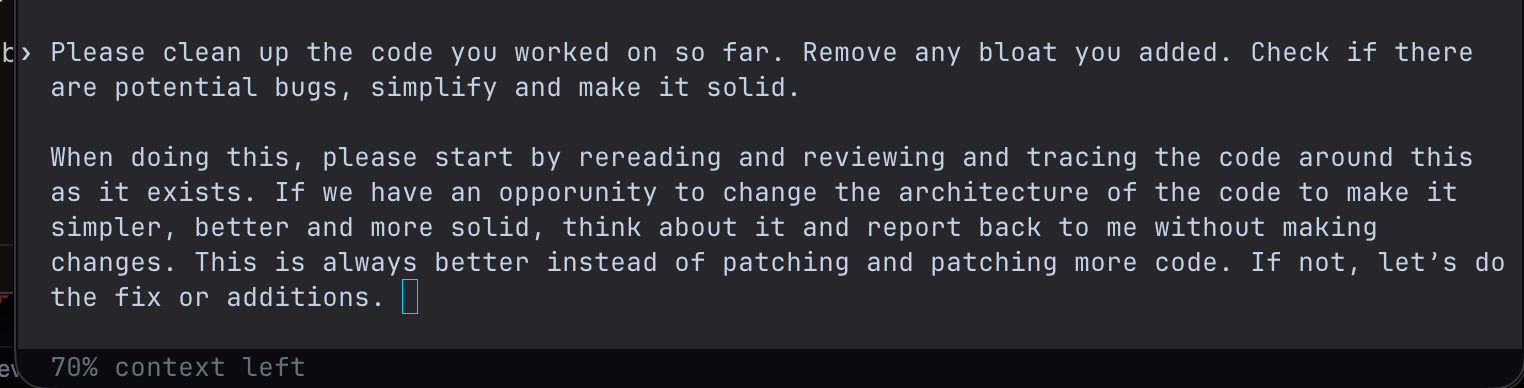
Once the plan is executed, before I review and read code, I run this prompt.
The key here is to let the agent know that patching code continuously is worse than solving problems from first principles. Otherwise the agent will default to just patch and patch which will create a mess of a codebase along with many files with dead code.
5. Rinse and repeat
Just repeat the process until you verify the functionality you need.
Another tip is to not only check the new fix or the functionality but also the older ones that were already working.
Code might have changed or refactored which might have caused a regression.