

Software as a Victorian Theater
A Farewell to Software

No, that is the great fallacy: the wisdom of old men. They do not grow wise. They grow careful.
A Farewell to Arms by Ernest Hemingway
You are in London, it’s 1852.
Earning nine shillings a week in Southwark, you spend most of it on rent and bread.
Schweppes made a fortune selling lemonade at the Crystal Palace this summer, insurance houses are turning tricks in Lombard Street and wool traders shouting at the Royal Exchange.
On the lookout to turn more bucks, you look into railways hiring people to dig the new lines out of King’s Cross and Paddington. Men die every week on those lines. You let it go.
On the way to home, you walk with your pal, Jessop. His cousin in Bermondsey just sold a patent for an improved rubber seal. Cost him five quid to get the patent - sold to a manufacturer in Sheffield for 12 pounds.
It looks like this:

It is just a rubber seal.
You think you can turn a quick tenner if you were to just get a patent. However patents cost a ton of money and time - you gotta hit the Home Secretary, the Attorney General, the Lord Chancellor - and pay upwards of 400 pounds to just get one piece of paper.
God save the queen, there is a new legislation: 1852 Patent Law Amendment Act.
You pay £25 at a single office in Chancery Lane - you get your patent.
You start by getting a patent on your triangular shaped rubber seal patent. Then a square one. A new one with flowers decorated around it. You sell them £100 a piece.
Business is good. For now.
This is the Victorian Patent Fever of 19th Century.
Patent grants went from 455 in 1851 to 2,187 in 1853 — a 5x increase in two years.
People started inventing things for the sake of the invention. Cholera belts, the cigar-holding pencil case knife, perpetual motion machines, fire escapes more dangerous than the fire and more…
We are going through a parallel time in history with software. Software is being created as a performative act. A mere theater. Rather than for the use of it.
Code execution with Claude Code and Codex enables everyone to create software. And a lot of people do. Not for what it does - but for the creation act itself.
If you scroll through X a bit, you will see. If you don’t, you are watching too closely. Hundreds of posts about what people built in the last 60 minutes.
A small number of posts about whether anyone used it. Almost none about whether it was worth building.
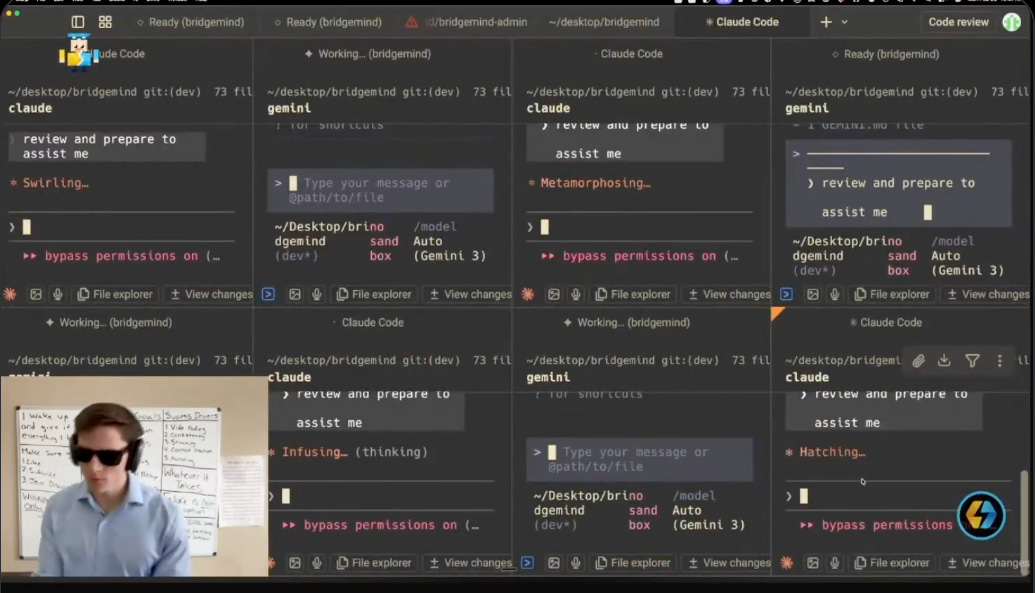
We will get a lot more software to use. Or not use.
When the cost of producing something drops below the social reward of having produced it, production becomes performative. Victorian invention cost £10 and a drawing. Modern software costs an afternoon and a Claude Code or (in my case Codex now) session.
I am not sure where this leads. Maybe toward personal or disposable software. Used once, then discarded.
Or maybe nothing ever changes. Microsoft and Salesforce eventually make a good chatbot on top of Excel and the CRM.
Here is what I am sure of: the scarcest resource is not the ability to build anymore. Or have taste. It is the judgement to know what to build. The venture worth your time.
Victorian era young men registered thousands of patents. We remember the telephone and the railway. The rest is moot.
Grow careful.
Think hard.